D. S. Senanayake and Sri Lanka’s unfinished agricultural ambition
As his 142nd birth anniversary approaches, Senanayake’s most useful agricultural legacy is a method: connect water, land, farmers and public investment. A modern version must add stronger markets, better technology and a fair return to rural work.
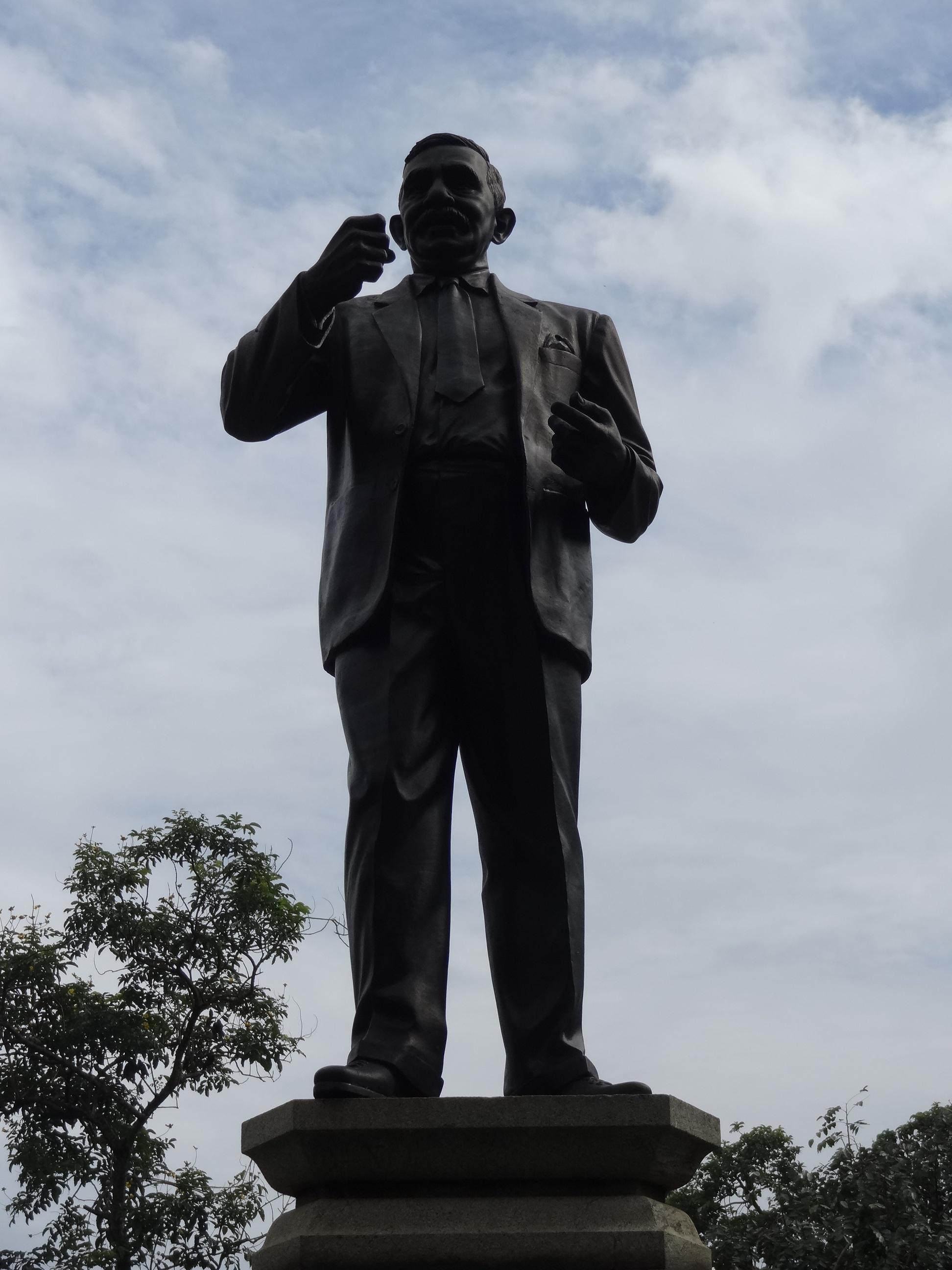

On 20 October 2026, Sri Lanka will mark the 142nd anniversary of D. S. Senanayake’s birth. His place in the independence story is familiar. His contribution to agricultural development deserves a different kind of commemoration: an examination of how the state can turn natural resources into productive opportunities, and why physical infrastructure alone cannot guarantee lasting rural prosperity.1
The central argument is straightforward. Senanayake treated agriculture as a connected development programme. Irrigation, access to land and settlement were parts of a wider attempt to expand production and rural livelihoods. The Ministry of Finance’s historical account identifies the development of Dry Zone rice cultivation through tanks, rivers and settlement schemes as a defining element of his economic vision.2 Today’s challenge is to recover that capacity to coordinate, while revising the assumptions that no longer fit Sri Lanka’s economy.
The agricultural strategist before the prime minister
Senanayake’s agricultural work began well before independence. The National Institute of Education’s history teaching manual records his appointment as Minister of Agriculture under the State Council arrangements introduced in 1931.3 This matters because irrigation and settlement were not late additions to his premiership. They developed through a sustained period of administrative and political work.
Minneriya became an important expression of that approach. The Senanayake family’s commemorative history describes a programme combining tank restoration, land brought into paddy cultivation and new settlements.1 That account is an interested source, rather than an independent evaluation of results. Nevertheless, it illustrates the institutional connection at the heart of the programme: supplying water would have limited value unless cultivators could also obtain land and establish viable households.
The achievement should therefore be understood as more than the construction of reservoirs. Engineers, administrators and farming communities had to make the different elements work together. Political leadership could set priorities and sustain attention; implementation depended on a much broader network of people and institutions.
Land policy was part of the infrastructure
The Land Development Ordinance, No. 19 of 1935, provided a framework for the organised development and allocation of state land. Its structure covers the mapping of land, selection of recipients, permits and grants, protection of holdings and succession. The published consolidated text gives its commencement date as 15 October 1935.4 The statute has subsequently been amended; its present provisions should not all be attributed to Senanayake’s original programme.
The policy significance lies in the combination of engineering and institutions. A canal brings water to a location. Land administration helps determine who can use the opportunity, on what terms and with what security. Those questions shape incentives to invest, the distribution of benefits and the treatment of the next generation.
A modern assessment must also ask whose existing rights and livelihoods a project affects. Transparent allocation, consultation with local communities and accessible ways to resolve disputes belong within agricultural planning. These are criteria for judging development, not questions that can be answered by the size of a reservoir alone.
Gal Oya: the scale of a lasting investment
Gal Oya carried the irrigation-development approach into the period after independence. An Irrigation Department account records the start of construction of Senanayake Samudraya in November 1949, when the existing Inginiyagala river-gauging station closed for the works.5 The project should be understood as an investment whose consequences extended over decades, rather than as an achievement confined to one administration.
The department’s Administration Report 2024 records Senanayake Samudraya’s capacity as 949.78 million cubic metres and its command area as 48,646 hectares. The report identifies the reservoir as Sri Lanka’s largest and describes a system extending across several irrigation divisions in the Ampara region.6 These figures establish the scale of the infrastructure. They do not measure annual harvests, farm profits or the distribution of water between individual holdings.
That distinction is essential. Storage capacity is an asset; reliable service is an outcome. A productive irrigation system needs maintained canals, workable allocation rules, timely information and institutions able to respond when water is scarce. The continuing value of an old investment depends on these less visible tasks.
What the success story leaves unresolved
The existence of irrigated settlement did not eliminate the economic difficulties facing smaller cultivators. Agricultural Credit in Gal Oya Irrigated Settlement System, a 1987 study by the Agrarian Research and Training Institute, documented tenancy, indebtedness and the subdivision of land within the scheme. Its findings also highlighted differences in access to credit and returns between larger and smaller farm operators.7
This is historical evidence, not a current survey of Gal Oya households. Its relevance is the warning it provides against a simple sequence in which a dam automatically creates prosperous farmers. Initial access to land and water must be followed by institutions that can adapt to changing household needs, farm sizes, financing conditions and markets.
Nor should agricultural expansion be treated as the only possible route out of rural poverty. Farming households may combine cultivation with paid work, services and small enterprises. A successful rural economy should expand those choices, rather than require every generation to depend on a progressively divided holding.
The contemporary challenge is the return to work
The Department of Census and Statistics’ Labour Force Survey reports that agriculture accounted for 26.0% of employment in 2024, approximately 2.07 million people. Separately, Table A-5 of its National Accounts of Sri Lanka 2024 reports an 8.3% share of GDP at current market prices for agriculture, forestry and fishing.8,9 These are the figures in the cited publications, with the national-accounts estimate marked provisional.
Employment shares and value-added shares are different measures. Their comparison is not a precise estimate of hourly productivity: working time, prices, secondary jobs and the composition of activities all matter. It nevertheless identifies a central policy problem. A large share of the workforce depends on a sector generating a much smaller share of measured economic value. Expanding cultivated area alone is an incomplete response.
The objective should be to increase dependable net income from rural work. That includes raising yields where agronomically sensible, reducing avoidable costs, limiting losses after harvest and producing goods for which customers will pay. Food security also requires affordable access to a varied diet and the capacity to manage supply shocks; it cannot be judged solely through one crop’s production.
What a modern agricultural ambition would require
A practical programme could begin with existing irrigation systems. Publish service standards and seasonal water plans, identify maintenance failures and evaluate whether repairs improve delivery to farms at the end of canals. Assess proposed new infrastructure against these alternatives, including environmental effects and the full cost of operating the asset.
Connect those improvements to services that farmers can use: soil testing, appropriate seed, agronomic advice, equipment hire, storage and reliable routes to buyers. Shared machinery and voluntary cooperation can reduce the disadvantages of operating a small holding without assuming that every farmer can finance equipment independently. Any public support should state the problem it addresses and the result it is expected to achieve.
Technology should enter through specific tasks. Weather information, irrigation scheduling, plant-disease support and transparent market information can be tested against current practice. AI advice requires locally relevant evidence and accountable human support. Its value should be measured in decisions improved, costs reduced or losses avoided, rather than in the number of applications launched.
Finally, publish a small set of outcomes: net farm income, water reliability, losses after harvest, market access and opportunities for younger people. The measures should cover different farm sizes and communities so that an attractive national average does not conceal exclusion. This is a proposed direction for policy, not a claim that Senanayake prescribed today’s technologies or institutions.
Remembering D. S. Senanayake through agriculture should lead beyond the ceremonial tribute. His example invites Sri Lanka to connect the parts of development that are too often managed separately. The contemporary task is to combine that ambition with better evidence, fair access and an explicit concern for the quality of rural livelihoods.
References & notes
Sources checked 9 September 2026. Historical evidence and policy interpretation are distinguished in the text; this feature is not an original empirical study.
- The Senanayakes. Father of the Nation. 17 January 2018. Family commemorative account; used for birth date and the description of Minneriya.
- Ministry of Finance, Sri Lanka. Journey Since Independence (1948–1955). Historical account.
- National Institute of Education. History, Grade 11: Teachers’ Instructional Manual. Section on D. S. Senanayake. Ministry of Education repository.
- Land Development Ordinance, No. 19 of 1935. Consolidated text, commencement and arrangement of sections. Sri Lanka Law / Blackhall Publishing.
- Irrigation Department. Inundation Maps of Gal Oya Flood in February 2011. Hydrometric-station history, section 2.
- Irrigation Department. Administration Report 2024. Ampara region, section 11.1.1 and Table 11-1, printed page 160.
- Wickramasinghe, G. Agricultural Credit in Gal Oya Irrigated Settlement System. Agrarian Research and Training Institute, Research Study No. 77, January 1987. Foreword and chapter 3.
- Department of Census and Statistics. Sri Lanka Labour Force Survey: Annual Report 2024. Employment and main jobs by industry.
- Department of Census and Statistics. National Accounts of Sri Lanka 2024. Table A-5, printed page 66: percentage share of GDP at current market prices. 2024 estimate provisional.
AI assistance: ChatGPT/Codex assisted with research, source checking, drafting and editing. The statue photograph is a credited photograph, not an AI-generated image.
Explore the argument.
Ask for an explanation, a comparison or the limits of the evidence. The guide uses this article and its source notes; it does not open the linked sources.
Checking membership…
Discuss the article
Which idea deserves further discussion, and what evidence would help evaluate it?
Checking membership…
No comments yet. Start a thoughtful discussion.